Posts Tagged ‘British’
The inspiration behind The Great British Pubs £2 Collection 🍻
“The pub sign says: you are still in England. Come in here and – however far from home you are, however, outlandish our name – you will find the comforts of your local town or village.”
Sebastian Faulks, ‘Icons of England’. Edited by Bill Bryson, 2010
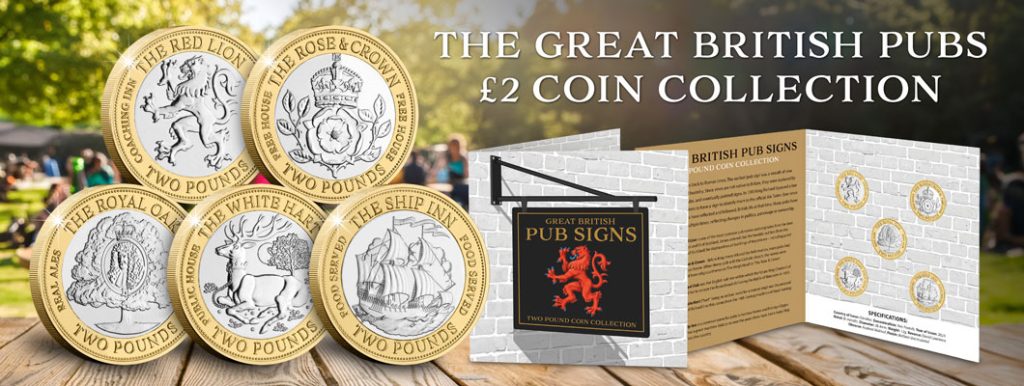
Following the special release of The Great British Pubs Collection, we wanted to delve into the history behind the iconic pub signs featured on the coins themselves.
It turns out the concept of a pub sign has been around for over 1,000 years! Spawning from the Roman custom of hanging vines outside to let thirsty travellers know they would soon have refreshment – combined with the Roman’s arrival in England, and the lack of grape vines to drape across the pub entrance, an evergreen bush was used as an alternative. So, pubs named The Bush or The Holly Bush owe their name to this ancient custom. The very first sign that there was a pub nearby…
The pub sign as we know it today was actually a royal decree. In 1393 King Richard ordered, ‘That whoever shall brew ale in the town, with the purpose of selling it, shall hang out a sign otherwise he shall forfeit his ale.’ As a result, many ale houses began to display signs. But with many still being unable to read it was necessary to use painted pictures so the establishment could be clearly identified.
So, keep reading below to explore the origins of each pub featured on the brand new £2 coin collection.
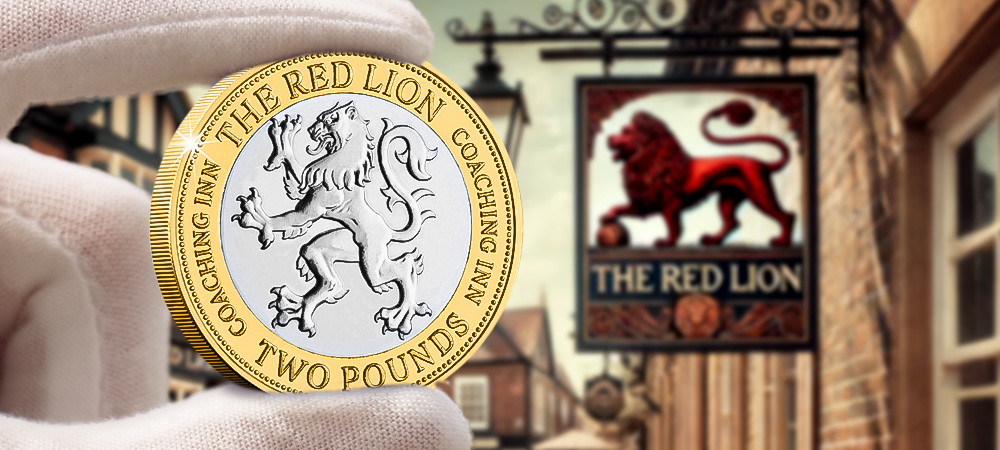
The Red Lion
The Red Lion is probably one of the most common names for a pub. It originates from the time of James VI of Scotland and I of England, uniting the Scottish and English crowns in 1603.
To emphasise the newfound union between the crowns of Scotland and England, James decreed that the heraldic red lion of Scotland should be displayed on all buildings of importance – which included pubs.
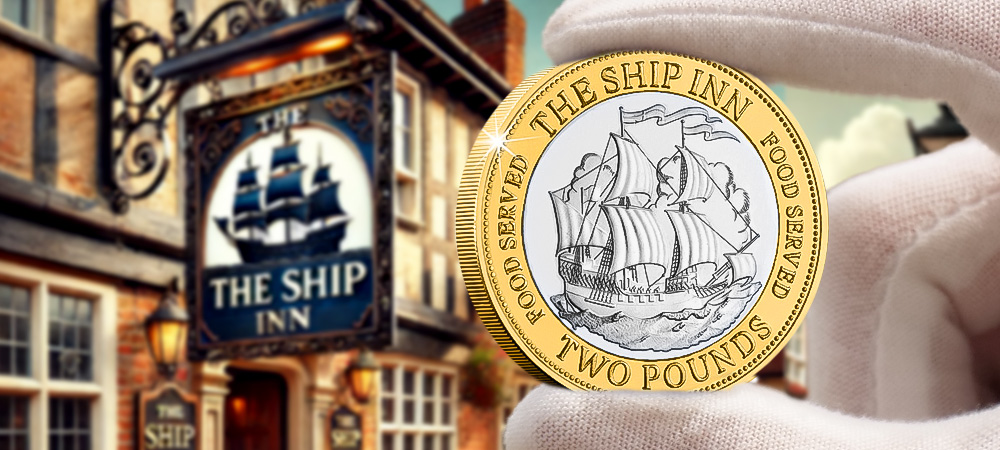
The Ship Inn
As a maritime nation, there is a rich tradition of seafaring and trade that has resulted in many pubs having a name related to ships.
In some cases, the ships depicted on these signs were specific, such as Victory, Vice-Admiral Nelson’s flagship.
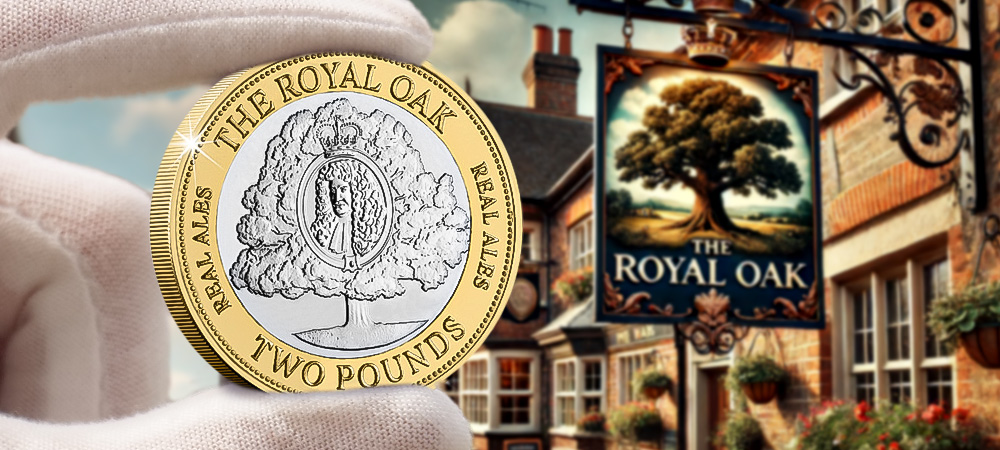
The Royal Oak
Another popular pub name is The Royal Oak. Originating after the Battle of Worcester in 1651, fought during the English Civil War.
Charles II’s Royalist Army was defeated during this battle by Cromwell’s Parliamentarians. Charles then had to flee for his life, seeking refuge in the form of a great oak tree near Boscobel House in Shropshire – with hopes that he would not be spotted by Cromwell’s men.
His plan succeeded and having evaded capture, Charles II went on to be restored to the throne. As a result of this dramatic tale of cunning escape, the tree became known as the Royal Oak and pubs across the country were named in tribute.
The White Hart
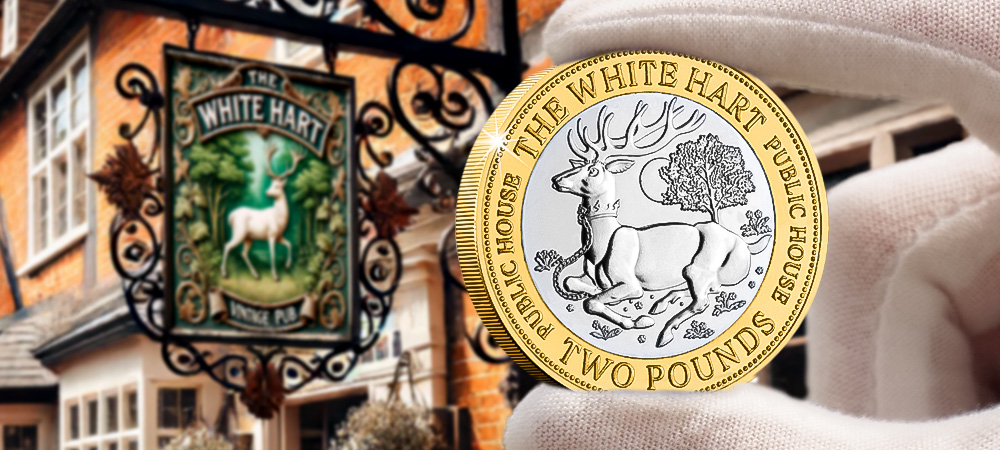
As mentioned at the beginning of this blog, it was the 1393 decree of Richard II that made pub signs compulsory. The White Hart was Richard’s personal badge and so many pubs chose to adopt the name at the time.
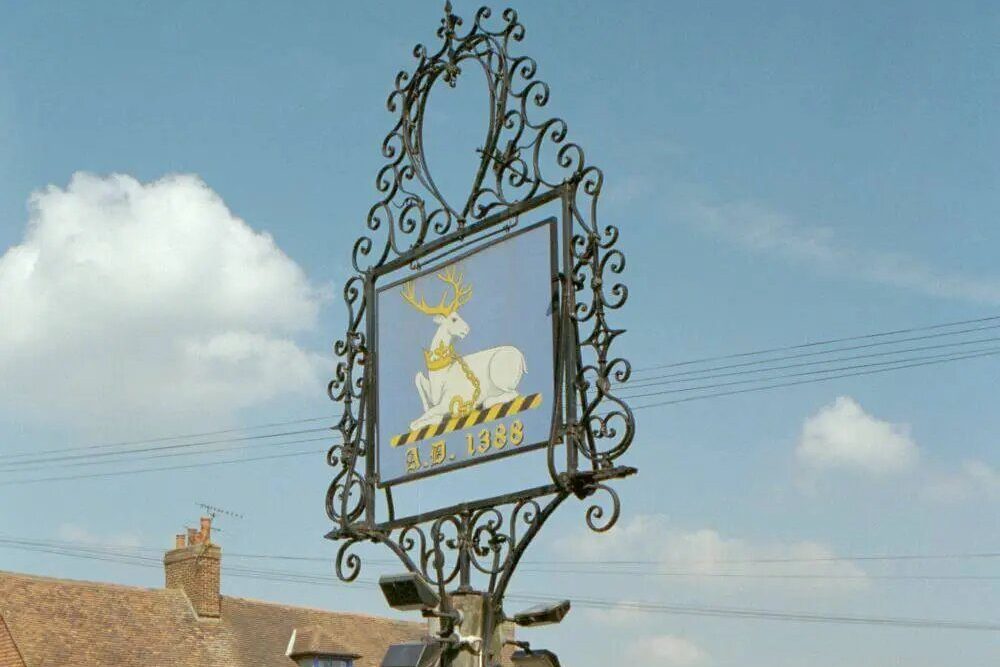
There’s even a Grade II listed sign for The White Hart in Bletchingley, Surrey – dating back to the 18th century. It is shown in the image below.
The Rose and Crown
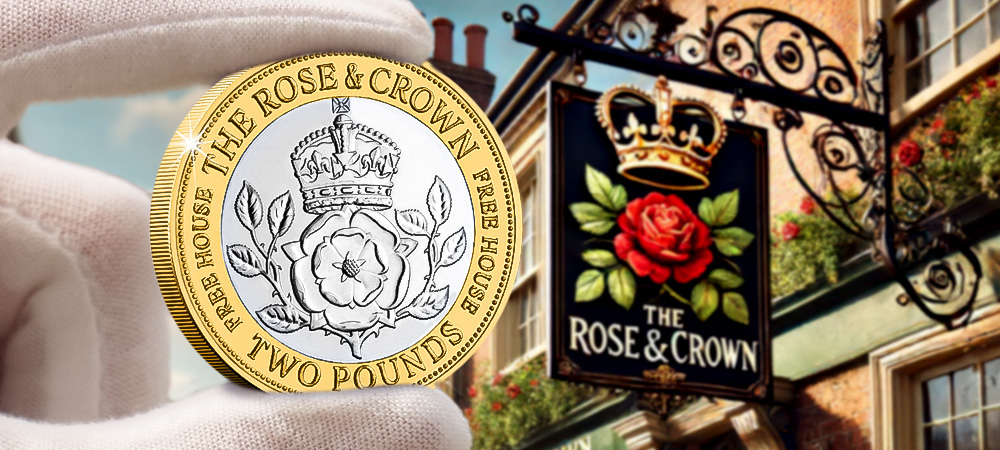
Rooted in a key event of British history, The Rose and Crown celebrates the end of the War of the Roses 1455-1487. A series of civil wars for the throne of England between two competing royal families: the House of York and the House of Lancaster.
The result was the uniting of the red rose of Lancaster and the white rose of York when Henry Tudor married Elizabeth of York. Hence the literal phrasing of the rose and crown together, united.
Where you can get your set today
The Great British pub is at the heart of the community. As you’ve read, this has been the case for generations, so celebrate this integral part of Britain’s culture with The Great British Pubs £2 Coin Collection!
These coins are not just a tribute to the historic artwork above pub entrances, but also a celebration of the stories and memories created within their walls.
Click here to secure yours today >>>
A Journey into Supersonic History with Chief Concorde Engineer John Britton
Commemorating Concorde’s Final Flight
Have you ever dreamt of stepping into the world of supersonic aviation history? Well, I recently had the chance to turn that dream into reality as I embarked on a thrilling adventure to the Bristol Aerospace Museum. This journey wasn’t just about wandering through exhibits, it was about commemorating the 20th anniversary of the final flight of the world-famous supersonic aircraft, Concorde.
I jumped at the opportunity to take our brand new Concorde commemoratives on board Concorde Alpha Foxtrot 216 G-BOAF.
On Board Concorde G-BOAF
As I set foot on the Concorde, I couldn’t help but feel the weight of a lifelong dream coming true. The sleek lines, the aviation marvel that once ruled the skies—it was all there beneath my feet. But this adventure wasn’t just about being on board; it was about delving into the heart of Concorde’s legacy.
The highlight of my day? An exclusive interview with none other than Concorde’s Chief Engineer, John Britton. Imagine having the opportunity to pick the brain of the mastermind behind this supersonic aircraft.

Behind the Scenes: Exclusive Interview with Chief Engineer John Britton
The stories, the facts, and the rich history he shared with me were nothing short of awe-inspiring. Britton’s insights transported me back in time, painting a vivid picture of Concorde’s glory days. From the engineering marvels that defined its success to the intricate details of its final flight.
As I listened to Britton, I couldn’t help but marvel at John’s passion and engineering brilliance that helped bring Concorde to life.
Leaving the museum that day, I carried with me not just the commemoratives that had traveled on Concorde’s final journey but a newfound appreciation for the legacy of supersonic travel. The Bristol Aerospace Museum had transformed a casual visit into a journey through time.
I urge you to step into the world of Bristol Aerospace Museum and witness this iconic aircraft for yourself.

Collect the A-Z of Quintessentially British 10p Coins
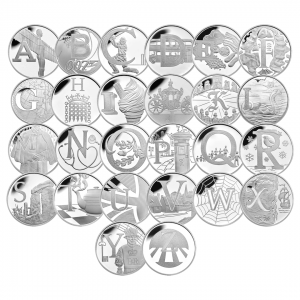
Celebrate all things quintessentially British with the 26 new 10p coins released into circulation this March. The Royal Mint’s A to Z Silver Proof Coin Series is set to create a collecting storm, with each stunning design featuring a much loved British icon, from the famed English breakfast to the legendary King Arthur. Which will be your favourite?
 A is for Angel of the North, the largest UK sculpture, standing at 20 metres tall and welcoming visitors to Gateshead with outstretched, curving wings that are said to give a sense of embrace.
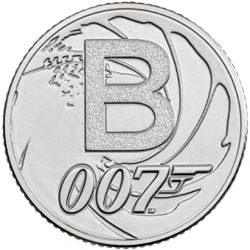
B is for Bond, James Bond. This coin features the unmistakable gun barrel and 007 logo from the nation’s favourite fictional Secret Service Agent and suave character, first brought to the Silver Screen by Sean Connery in 1962.
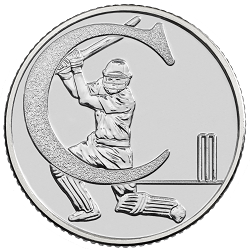 C could only be Cricket, the Great British sporting pastime and the country’s national sport since the 18th century. We don’t like cricket, we love it!
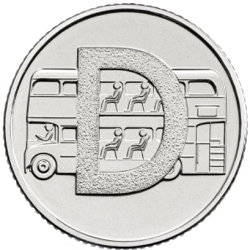 D stands for Double Decker Bus, famously recognised world-wide as an icon for London, with many of the city’s buses still remaining red as a symbol for the capital and as a much loved tourist attraction.
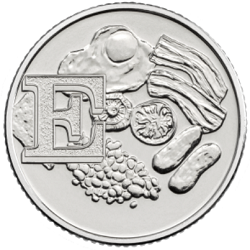 E brings us to the first mention of Great British food, the irresistible English breakfast, also known as a fry up and featuring much loved classics such as eggs, bacon, sausages, hash browns, beans, tomatoes, mushrooms and black pudding.
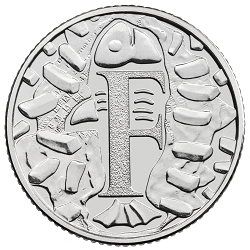 F is for Fish and Chips, another food lover’s favourite and British sea-side classic, with the first fish and chip shop opening in the 1860’s, although to this day there is much debate over whether credit is owed to the North or South of Britain for its origin.
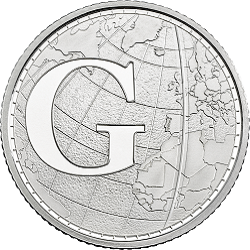 G stands for Greenwich Meantime, with the Royal Observatory in Greenwich being famous as the home of the historic Prime Meridian of the World, dividing eastern and western hemispheres of the globe.
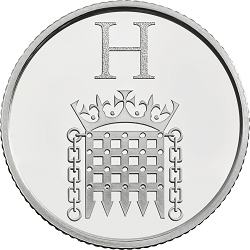 H is none other than the Houses of Parliament in Westminster, perhaps the most recognisable skyline along the River Thames for the past 300 years and meeting place to examine UK Government, laws, taxes and current issues.
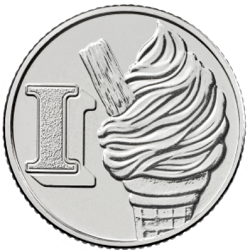 I takes us to another classic sea-side treat, the Ice Cream Cone. With a multitude of flavours, toppings and types to choose from, everyone enjoys a scoop or two of ice cream on a British summer’s day.
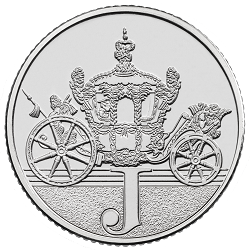 J is for Jubilee and what better excuse could there be to bring the community together and get out the bunting for a Great British street party than to celebrate our much loved monarchs?
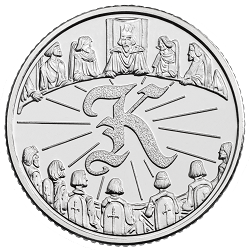 K stands for the myth of King Arthur and his Knights of the Round Table, fabled fifth century warriors of the Arthurian legend, believing in the code of chivalry and upholding the values of honour, honesty, valour and loyalty.
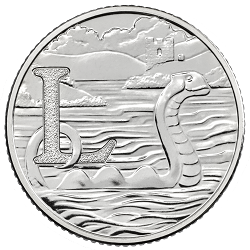 L is another British myth shrouded in mystery, the legend of the aquatic beast known as the Loch Ness Monster or ‘Nessie’ as commonly referred to in Scottish folklore, still yet to be officially discovered.
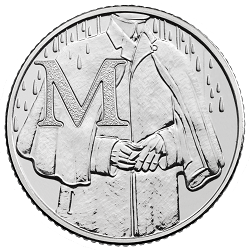 M stands for the humble Mackintosh, an essential item of clothing needed to battle against the Great British weather. Because when it rains, it pours!
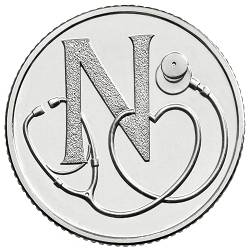 N is for the NHS, or National Health Service, a hugely ambitious idea initiated in 1948 to bring good healthcare to all and now renowned as one of the best healthcare provisions in the world.
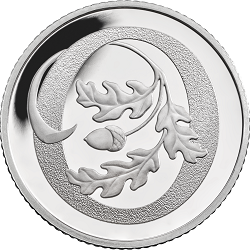 O is the mighty Oak tree, a symbol of strength and endurance and the national tree for England and Wales, arguably the most commonly known native British tree found in deciduous woods.
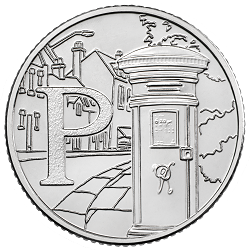 P has to be the Great British Post Box, resplendent in red and an iconic image gracing postcards and tourist souvenir shops across the country.
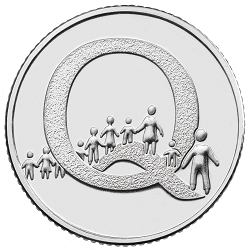 Q is a world renowned Great British value, forming an orderly Queue and waiting in line with good manners and patience. The people of Britain have queuing etiquette down to a fine art.
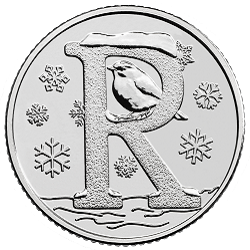 R stands for our beloved Robin redbreast, the UK’s favourite bird that can be seen year round, but most famously at Christmas time when they make a beautiful picture against the frost and snow.
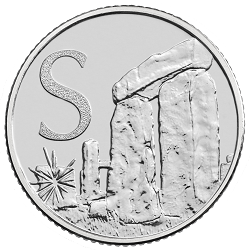 S is the prominent prehistoric British monument, Stonehenge, consisting of a ring of stones from our Neolithic ancestors, forming one of the Wonders of the World and a source of both spiritualism and inspiration.
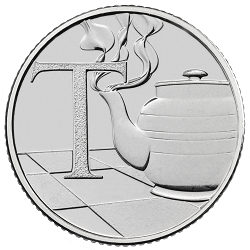 T could be none other than the quintessential British cup of Tea, brewed to perfection. The UK has been one of the greatest consumers of tea since the 18th century, with 165 million cups drank daily according to the UK Tea & Infusions Association.
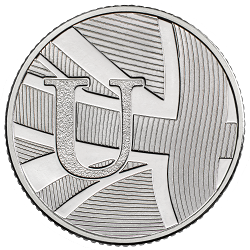 U stands for a classic British symbol, the Union Flag, otherwise known as the Union Jack, which was first introduced in 1606 and flown at the main masthead of all English and Scottish ships.
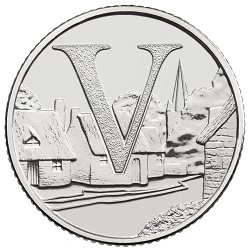 V is for Villages, with Britain being known for its quaint communities and setting an ideal for living in a peaceful rural atmosphere, away from the hustle and bustle of city life.
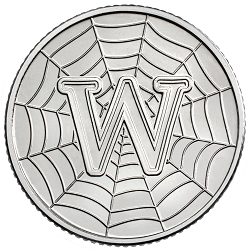 W is the World Wide Web, invented by British computer scientist, Tim Berners-Lee in 1989 to open up the internet so that anyone, anywhere could use it, connecting the world with a single ‘universal space’.
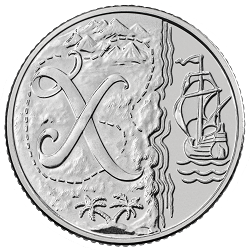 X Marks the Spot of course! Throughout history, treasure hunters, great explorers and infamous pirates alike have set out to find hidden bounties buried at secret map locations marked with the letter X.
 Y stands for the Yeoman Warder or ‘Beefeaters’ that nowadays stand ceremonially on guard at the Tower of London and were originally part of the Yeoman Guard, charged to personally protect the monarchs of Tudor times.
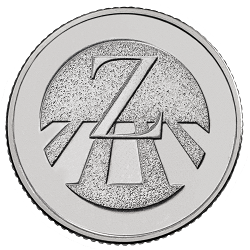 Z is the final coin in the series and stands for Zebra Crossing, used in the UK and worldwide to give right of way to pedestrians, but perhaps known most famously in the UK for the Abbey Road crossing featured in the iconic Beatles album artwork.
Let us know your favourite by commenting below.
If you’re interested…
You can own all of the A-Z 10ps in Silver Proof quality now.