
Uncategorised
Britain’s Forgotten Victory Celebration: A Story Worth Remembering
When people think of the end of the Second World War, one image usually comes to mind.
Crowds filling The Mall. Strangers embracing in the streets. Union Flags waving from every window. King George VI and Winston Churchill appearing on the balcony of Buckingham Palace. And, of course, the image of Princess Elizabeth celebrating anonymously among the crowds.
These scenes from VE Day on 8th May 1945 have become part of Britain’s national memory.
But there was another extraordinary day – one that is often overlooked despite being one of the largest and most significant military events ever staged in Britain.
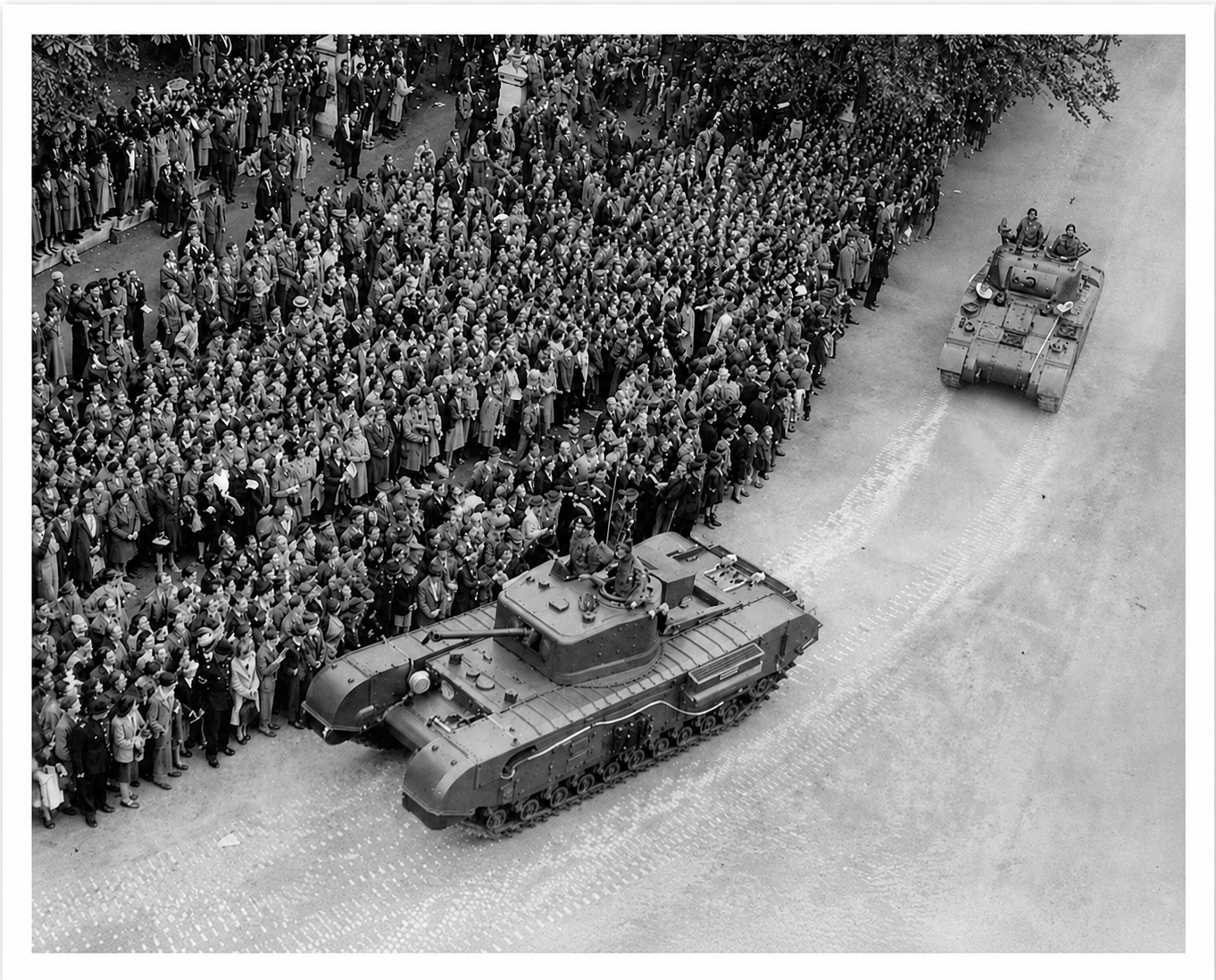
On 8th June 1946, more than a year after Victory in Europe was declared, London hosted the Victory Parade.
It wasn’t simply another celebration.
It was Britain’s opportunity to formally thank the generation that had fought the Second World War.
The Victory Parade was unlike anything the country had ever witnessed.
More than 30,000 servicemen and women marched through the streets of London.
Representatives came not only from Britain but from across the Commonwealth and Allied nations whose combined efforts had secured victory.
The route passed through the heart of the capital, where enormous crowds lined the streets from the early hours of the morning.
Contemporary reports estimated that hundreds of thousands gathered to watch in person, while millions more followed newspaper coverage, radio broadcasts and newsreel footage shown in cinemas across Britain.
Watching from the royal dais were King George VI, Queen Elizabeth, Princess Elizabeth, Princess Margaret, Prime Minister Clement Attlee and senior military leaders.

Capturing the spirit of the day were the words of King George VI, taken from his message to Britain’s schoolchildren during the Victory celebrations:
“TODAY, AS WE CELEBRATE VICTORY”
King George VI
For many spectators, this was the first opportunity to thank those who had served.
For many of those marching, it marked the end of years of sacrifice, hardship and uncertainty.
Yet the parade was about far more than those who returned home.
Every regiment marching through London represented friends who never came back. Every cheer from the crowds carried memories of loved ones who had made the ultimate sacrifice. The celebrations recognised not only victory, but the immense cost at which it had been achieved.
It was a day filled with pride, relief and remembrance all at once.

80 Years On
This year marks the 80th Anniversary of the 1946 Victory Parade, a milestone that offers an opportunity to reflect on one of the most important yet often overlooked moments in Britain’s post-war history.
As the number of veterans who witnessed those celebrations continues to diminish, anniversaries such as this play an increasingly important role in ensuring their stories, and the significance of that remarkable day, are never forgotten.
Despite the importance of the 1946 Victory Parade, it has never before been commemorated on a British Isles coin.
To mark its 80th Anniversary, a new Silver Proof £5 Coin has been issued featuring King George VI saluting the servicemen and women who marched through London that historic day.
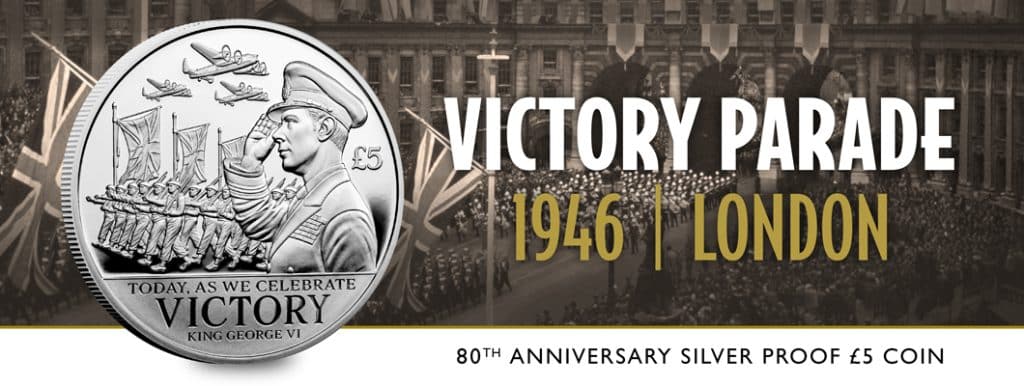
If you’d like to commemorate the 80th Anniversary of this remarkable moment in British history, you can discover more about the limited-edition Victory Parade Silver Proof £5 Coin by clicking the link below.
The Hunt Begins: Introducing our Metal Trading Cards
There’s a thrill every collector knows.
The split second before you flip a card, scratch a ticket, peel back a wrapper, all to discover whether you’ve found something rare.
That moment of possibility is what trading card collecting has always been built on – and it’s exactly what has inspired indX.
Welcome to indX: Trading Cards Made from Metal
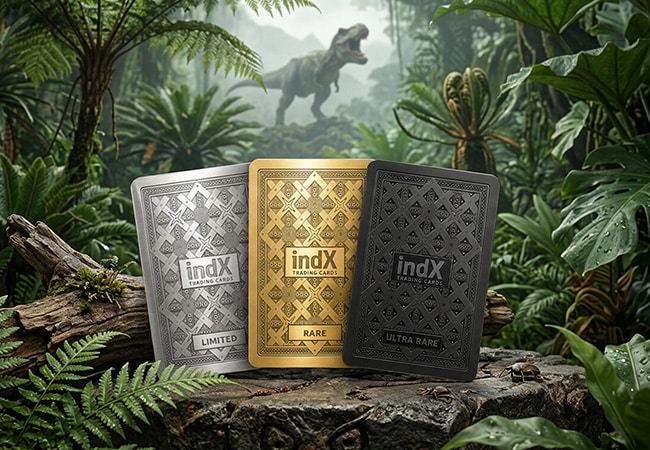
indX is a new kind of trading card, created for collectors who love rarity, discovery and beautifully made pieces. Instead of traditional paper cards, every indX release is precision-crafted in metal, giving each card the weight, finish and feel of a collectible you’ll want to keep, display and talk about.
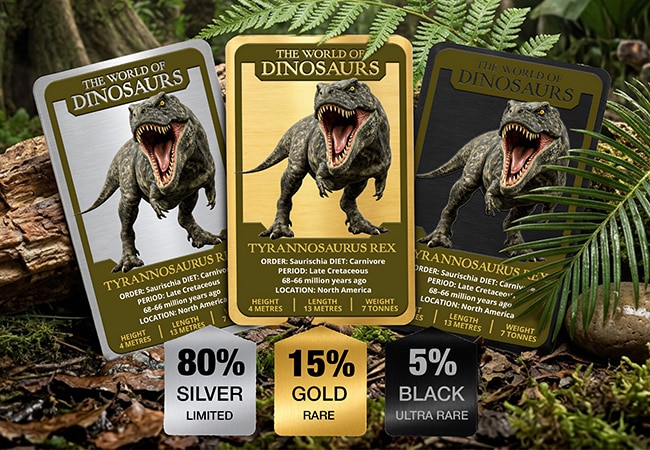
The debut release begins with one of the most famous creatures in history: Tyrannosaurus Rex. Bold, instantly recognisable and endlessly fascinating, the T-Rex is the perfect starting point for the new World of Dinosaurs collection.
And right now, you can claim the first indX metal trading card completely free. You only cover £1.99 postage.
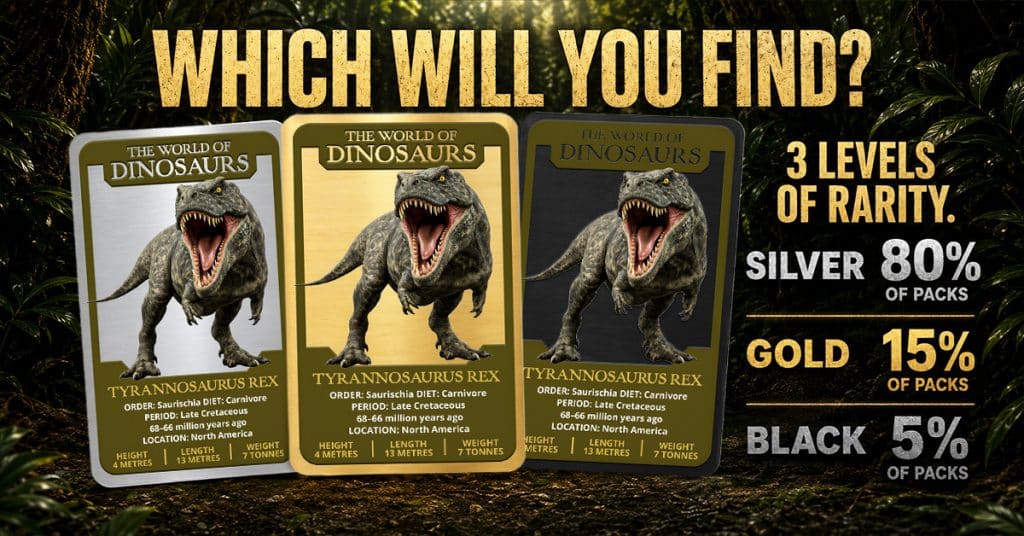
One Blind Pack. Three Editions
Every metal trading card arrives sealed, and nobody knows which edition is inside until the pack is opened.
There are three possible editions:
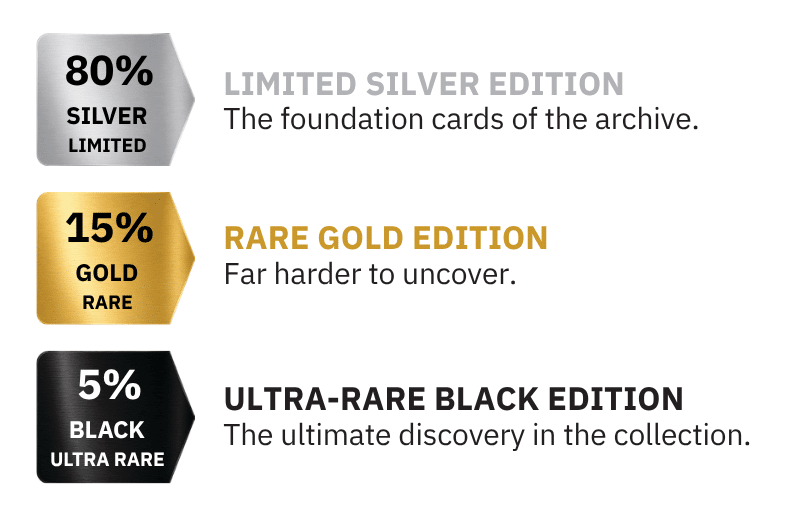
That means just one in twenty collectors will reveal the Ultra-Rare Black Edition. But whichever edition you open, you’ll own part of the very first indX release.
In many trading-card collections, a “common” card can be produced in huge quantities. indX works differently.
The entire debut T-Rex release is limited to just 5,000 cards across all three editions. Once they’re gone, they will not be produced again.
So even the Silver Edition is one of only 4,000 that will ever exist. It may be the most widely available edition in this release, but it is still a limited collectible from the first-ever indX drop.
Why Trading Cards Capture Collectors’ Imaginations
Trading cards have been collected, swapped and treasured for generations. From sports cards to fantasy games, pop culture releases and rare character cards, the appeal has always been the same: the excitement of the unknown.
You don’t just buy a card. You open a pack and discover what’s waiting inside.
That simple idea has created some of the most passionate collecting communities in the world. Rare pulls are photographed, shared, discussed and remembered. Collectors chase complete sets, compare editions and take pride in owning something only a limited number of people will ever have.
indX brings that same collecting excitement into a new format – metal trading cards with limited releases and sealed within mystery blind packs.
Claim Your Free T-Rex Metal Trading Card
The first indX release is free to claim today. You only cover £1.99 postage.
Just 5,000 T-Rex metal trading cards will be created, and once they have all been claimed, this debut release will never return.
Whether you open Silver, Gold or one of only 250 Ultra-Rare Black Editions, you’ll own a piece of the first-ever indX collection.
The only question is: which edition will you reveal?
The Start of the World of Dinosaurs Collection
The T-Rex card is more than a single release. It is the beginning of the World of Dinosaurs collection, a monthly series celebrating some of the most iconic prehistoric creatures ever discovered.
After claiming your free debut card, you can continue building your collection with future dinosaur releases. Each new card will follow the same sealed mystery format, giving you another chance to discover a rare edition every month. You can pause or cancel anytime.
Which card will you receive? Find out here >>
The Bayeux Tapestry Returns to Britain – A Historic Moment for Collectors
For the first time in almost a millennium, the legendary Bayeux Tapestry will return to Britain, where it will be displayed at the British Museum in what promises to be one of the UK’s most anticipated cultural events.
And excitement is already reaching extraordinary levels.
When tickets for the Bayeux Tapestry’s historic return to Britain were announced, more than 50,000 people joined the queue in the hope of securing a place at what promises to be one of the UK’s most anticipated cultural events.
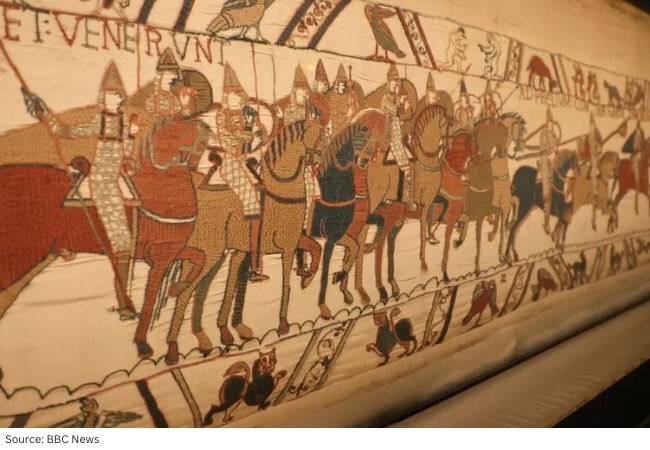
And so I’m delighted to announce a brand-new Official collection of commemorative coins celebrating the Bayeux Tapestry and its remarkable story currently in the works.
Due to be released later this year, this promises to be a release collectors won’t want to miss.
Register your interest today and you’ll be the first to:
- See the new coin designs
- Jump the queue and add the coins to your collection before general release
- Receive release updates direct to your inbox
This is undoubtedly an unmissable opportunity for history lovers and collectors alike.
Register your interest today and be among the first to hear about our Bayeux Tapestry commemorative coin collection.