The Gold Guinea: Britain’s Most Prestigious Historic Coin?
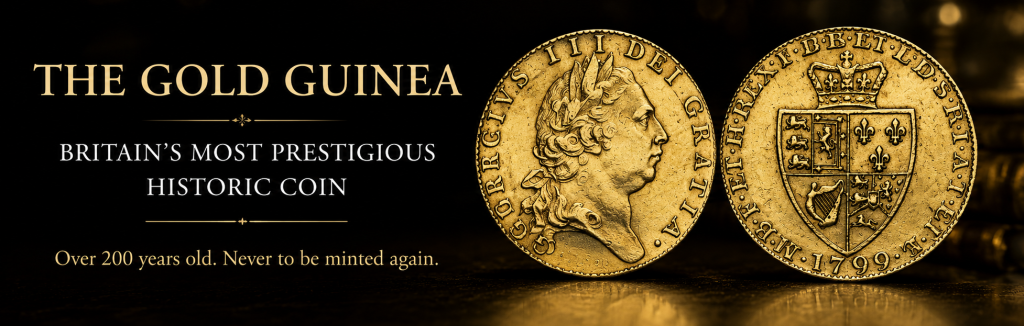
Long before the Sovereign became Britain’s most famous gold coin, there was the Guinea.
Elegant, prestigious, and deeply woven into British history, the Gold Guinea was once the coin of the elite – a symbol of wealth, influence, and refinement. More than 200 years since the final examples were struck, surviving Guineas are now among the most desirable historic gold coins collectors can own.
But what exactly is a Gold Guinea – and why does it still captivate collectors today?
What is a Gold Guinea?
First introduced in 1663 during the reign of King Charles II, the Guinea quickly became Britain’s premier gold coin. Struck in rich 22-carat gold (91.67% purity), it remained in circulation for over 150 years before being replaced by the Sovereign under the Great Recoinage Act of 1816.
Its name comes from the Guinea region of West Africa, where much of the gold used to produce the coins originated.
Today, every surviving Guinea is an original piece of British history – and with production ending in 1813, no more will ever be made.
Before the Sovereign, There Was the Guinea
For generations, the Guinea represented status and prestige across Britain.
While the Sovereign would later become Britain’s flagship gold coin, the Guinea was the original standard for high-value trade, luxury purchases, and elite society.
Even today, its legacy lives on:
- Thoroughbred horse sales in Britain and Ireland are still traditionally conducted in guineas
- The term itself remains associated with luxury, exclusivity, and wealth
- A Guinea was valued at 21 shillings, compared with the Sovereign’s 20
Owning a Guinea is not simply owning gold – it is owning a coin once handled by Britain’s aristocracy, merchants, military leaders, and wealthy collectors of the Georgian age.
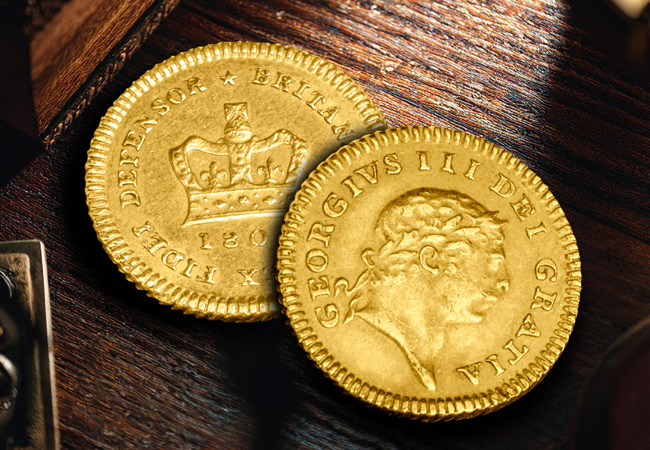
Some denominations are particularly scarce. The Third Guinea, for example, was only ever issued during the reign of King George III, while the Quarter Guinea appeared only under George I and George III.
These limited mintages make certain Guineas especially sought after today.
The Reign of George III: A Defining Era of British History
Many surviving Guineas originate from the reign of King George III (1760–1820), one of the most dramatic and transformative periods in British history.
These coins circulated during events that shaped the modern world:
- The American War of Independence
- The French Revolution
- The Napoleonic Wars
- The formation of the United Kingdom through the Act of Union in 1801
Holding a Guinea from this era is like holding a surviving fragment of Britain’s imperial past – a coin that existed during moments of war, revolution, political change, and global expansion.
Why Collectors Still Pursue Gold Guineas Today
Modern collectors are increasingly drawn to Guineas for several reasons:
- Genuine 22-carat historic gold
- Over 200 years old
- Strong historical importance
- Limited surviving numbers
- Timeless British prestige
Unlike modern bullion coins, every Guinea carries its own unique history and character – making each example far more than simply its gold content.
As surviving specimens disappear into private collections, demand for authentic Guineas continues to grow.
Discover the Current Range of Available Gold Guineas
Whether you are seeking an iconic full Guinea, a scarce Third Guinea, or a prestigious multi-Guinea piece, there has never been a better time to explore these remarkable historic coins.